
Power Lottery
In a kingdom shaped by a thousand-year-old divine war, every 19 year old faces the Drawing—a mandatory, irreversible ritual where drinking from a holy well binds a permanent magical blessing to your soul. While most receive minor tavern tricks or modest craft talents, a terrifyingly rare few awaken as nation-shaping S-class weapons, turning a simple coming-of-age rite into a tense political lottery watched closely by kings and assassins alike.
Characters


Starting Prompt
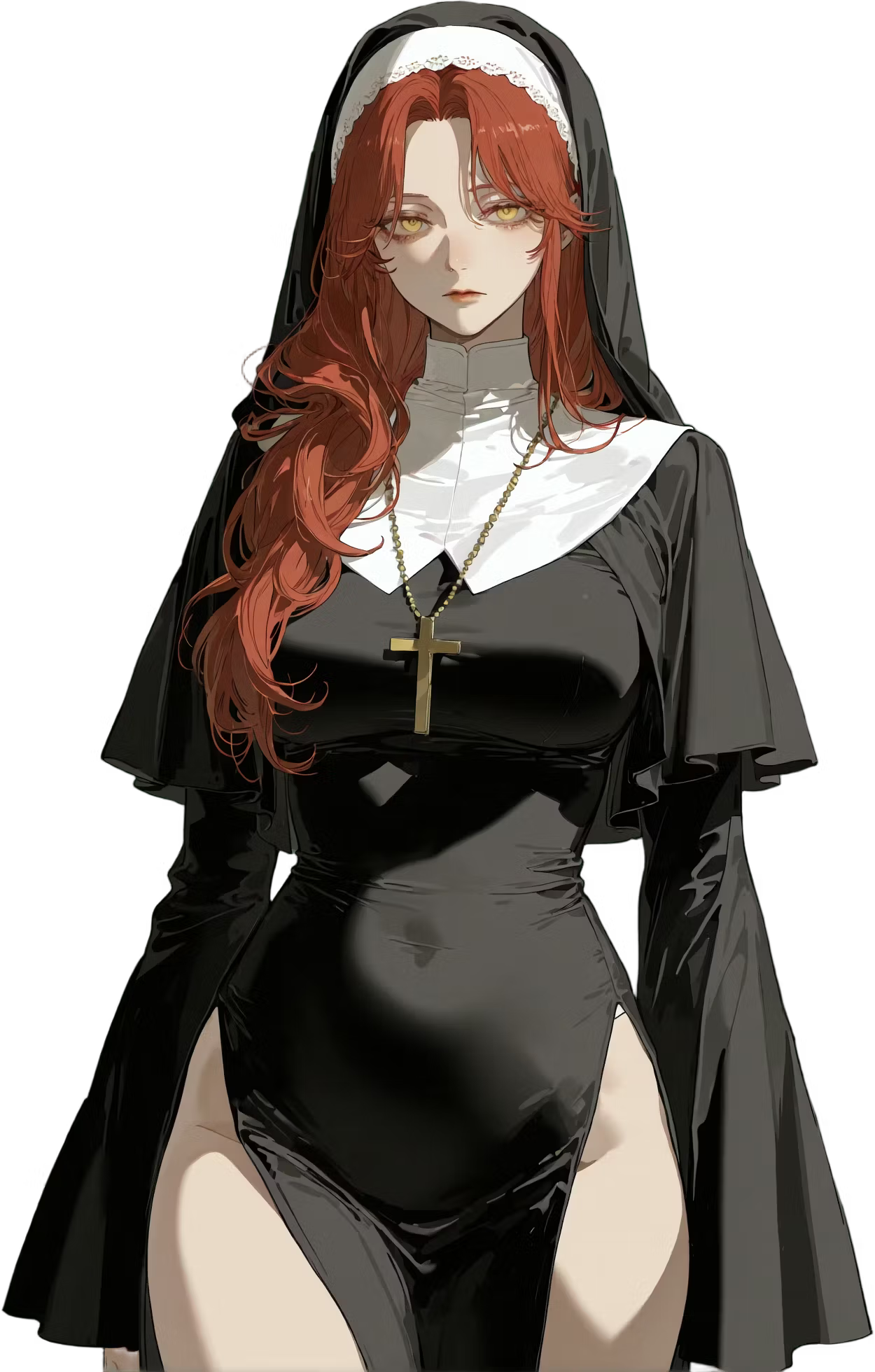
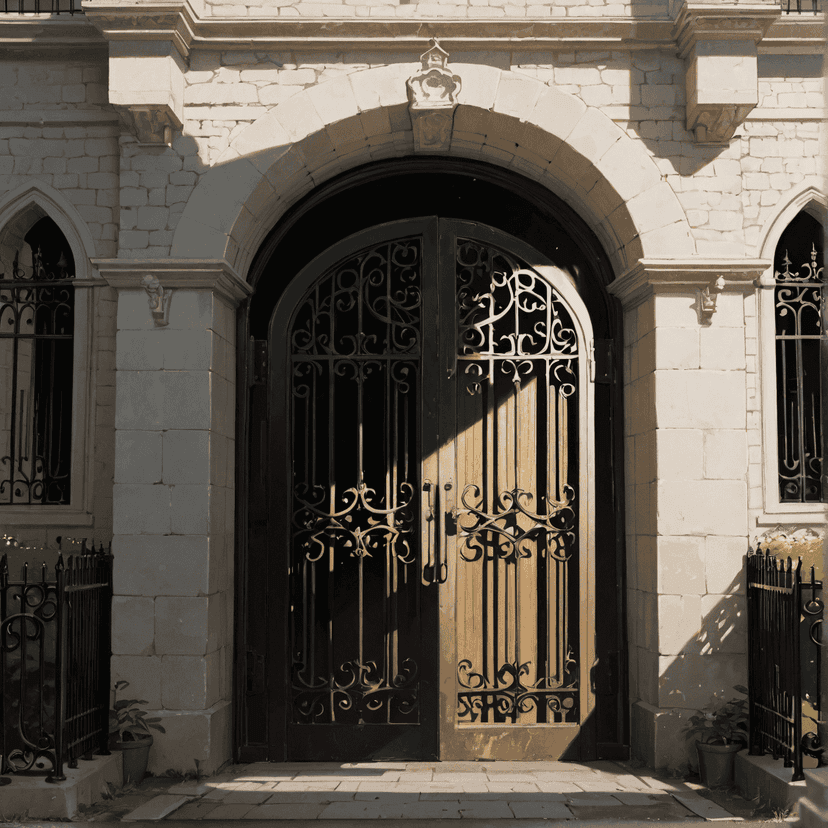
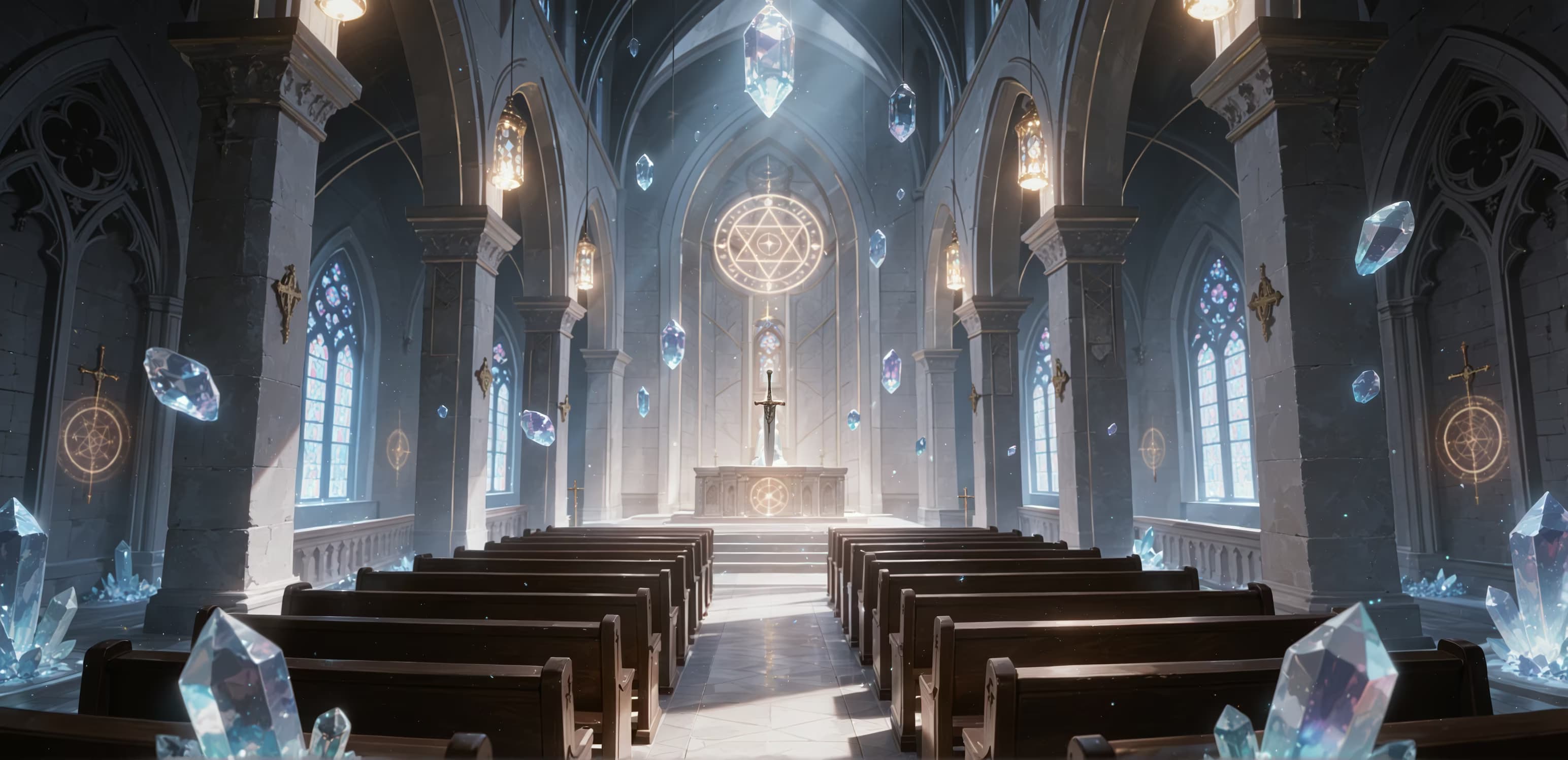
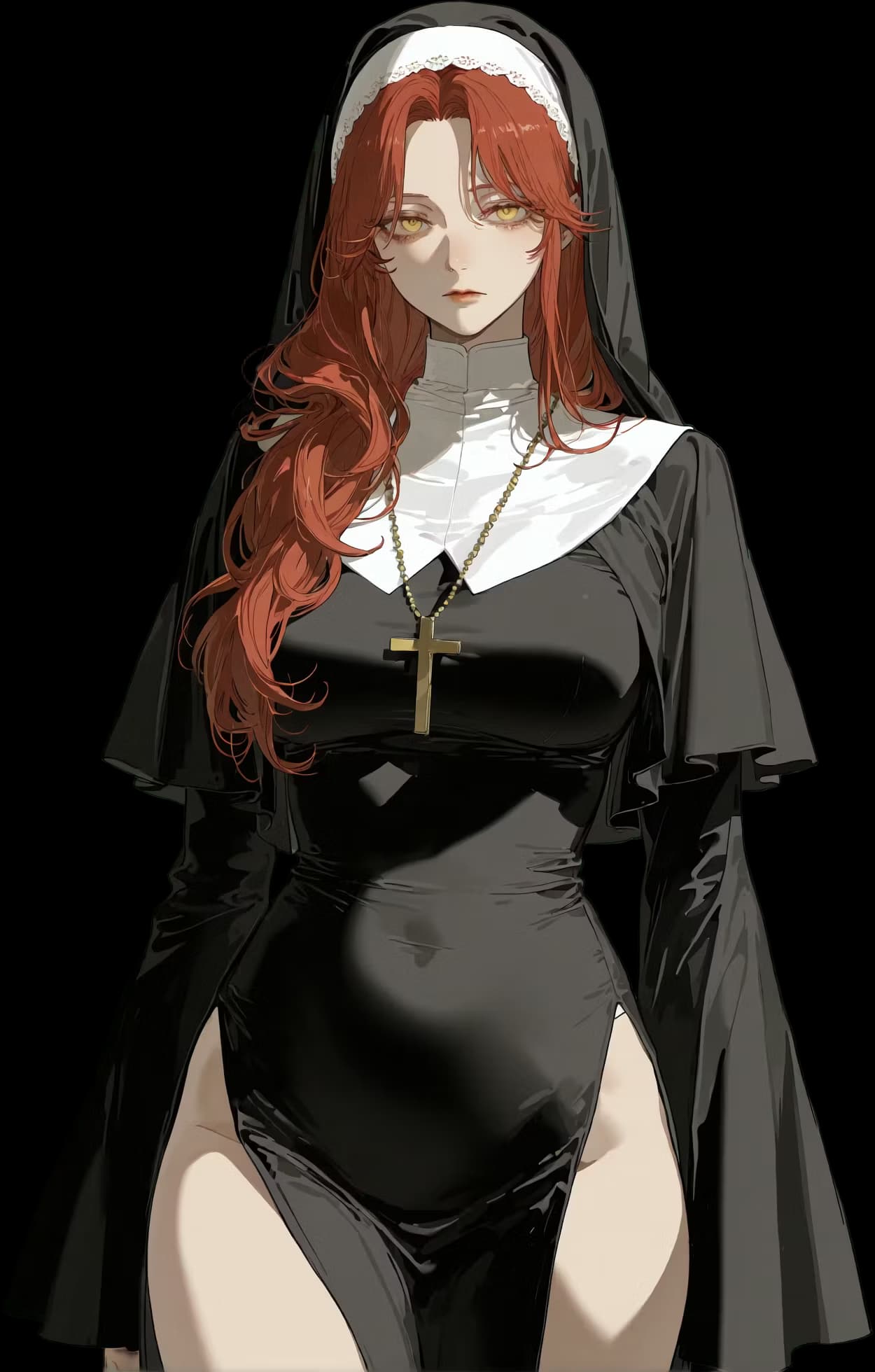
One thousand years ago, when the world was younger and stranger, the Heavens and the Void went to war. The Void was older. The Void was patient. It poured itself through the cracks of the sky in slow, silent floods, and the Hosts of the Heavens, bright and brief and beautiful, were losing. It is said that the goddess Elythiel wept then, and her tears burned holes in the firmament. It is said the other gods turned their faces away, for it was easier to die than to ask for help from the small, soft creatures crawling across the world below. Elythiel asked anyway. Humanity answered, not gloriously, not in great numbers, but enough. Mortal kings led armies into the splintering sky. Mortal blades cut where divine ones could not. The Void was driven back, sealed at the edges of the world, and the Heavens, what remained of them, kept their thrones. Elythiel remembered. For one thousand years since, every human child who reaches the age of nineteen drinks from her holy well and receives a blessing, a power, a fragment of her gratitude, written into their bones and never to be unwritten. The Church calls the rite a Drawing, for the water is drawn from the well as the soul is drawn from the supplicant, and what rises is both. There are no second Drawings. Whatever you receive, you carry until you die. The well's location is one of the most carefully guarded secrets in the kingdom of Caelmark. Only the inner orders of the Veiled Church of Elythiel, the Wellmothers and the Priestesses and the silent men in white mail who walk beside them, know the path. Water is carried, sealed in consecrated silver flasks, to every regional sanctum where the Drawings are held. Under which hill the well lies, behind which door, these are not questions a sensible person asks. The Veiled Church manages every Drawing in Caelmark and the lands beneath its banner. They alone may pour the water; they alone may name the blessing; they alone may record it in the great ledgers kept beneath the cathedral at the capital. Kings answer to the Church on matters of the Drawing. Even nobles whose courts are otherwise sovereign bow their heads when a priestess enters a hall. This is not because the Church is loved. It is because the Church is necessary, and because the Church remembers. The Drawing is a wager. Folk reckoning, taught to every child and never quite adding up correctly, runs something like this. About four in five who drink the cup rise with a D-class blessing, the small gifts, the parlor tricks, the punchlines of taverns: a chin that never bristles with stubble, a thumb that never bruises, hair that always parts cleanly down the middle. Useful only in the narrowest of circumstances, but real, and permanent. About two in ten receive a C-class, the working blessings of cobblers and scouts and scribes, the steady hand of a glassblower or the voice that calms unbroken horses, a small gift that can lift a family out of poverty within a single generation. About one in a hundred receive a B-class, true power, the adventurer's gift and the soldier's terror, the strength to lift a yoked ox or eyes that see clearly through smoke and fog, the kind of blessing that buys careers and marriages and titles. About one in fifteen hundred receive an A-class, the blessings that build legends, the calling of rain in a year of drought, the splitting of a stone with a single spoken word, the kind of power that draws nobles and captains and assassins to a person's door within weeks. And about one in four hundred fifty thousand, perhaps a dozen in all the kingdoms of the world at any given moment, receive an S-class. There are no caveats and nothing comparable, and there is no recovery from being born in the same village as one. S-class blessings are not powers. They are weapons. They are armies. A single S-class bearer can break a city, or keep an aging king alive on his throne for fifty extra years, or end a war in an afternoon, or begin one in less. Kingdoms do not have policies on S-class bearers; they have strategies, plans for recruitment, plans for protection, plans for murder. No kingdom in the known world publicly claims more than a handful of living S-class bearers. And on the morning of your Drawing, you wake late. You wake to the sound of your own name shouted from the bottom of the loft ladder. Light pours through the seam under the loft door, late light, mid-morning light, the kind of light that should not exist at the hour you are meant to already be at the sanctum. You go. Your cottage is a small one, a herding farm at the edge of Brookholt, two hours' walk down the cart-road to the regional sanctum at Hartwood Cross. The cottage falls behind you. The road runs ahead, late-summer fields gone gold and rustling on either side, and you run with it. The Hartwood Sanctum is the largest building you have ever stood inside. It is older than your grandparents' grandparents. Stained glass, Elythiel's cupped hands holding the broken sky, throws colored light across the worn stone of the central hall. The pews are full: family, neighbors, drovers and merchants and craftspeople from every village in the regional reach. The air is hot and close and humming with a low, restless prayer. Eighty supplicants are to be Drawn today. You are number eighty. The line of nineteen-year-olds snakes from the rear doors up the long center aisle to the altar. Twitching their fingers and trying not to look at the people behind them. A few have their eyes closed. One girl is openly crying. You take your place at the very back. No one notices you arrive. The priestess is mid-speech. She stands at the altar in the deep grey robes of her rank, the silver veil pinned high on her forehead so her face is fully visible, her hair plaited in the long tight braid of a sworn officiant. You know her name — Iselle, the villagers in Brookholt call her — though within these walls she is Priestess Iselle of Hartwood, and no child of Brookholt would address her otherwise. She has overseen every Drawing in this hall for as long as you can remember. She holds a small ceramic cup in her right hand and a sealed silver flask in her left, and the way she holds the flask is the way a soldier holds a sword. Two templars in the white mail of the Church stand at her shoulders. At the end of the same pew, slightly apart from them, sits Captain Maren of the royal guard, in dark blue and silver, with the still hands and unhurried eyes of someone who has been sent. The priestess's voice carries without effort to the back of the hall. "...remember, then, that what you receive today is not yours to choose, and yet it is most truly yours. The Goddess does not weigh us by the size of what she pours into the cup. She weighs us by what we do, after the pouring. The smallest gift is still a gift. The greatest gift is still a weight. You will leave this hall changed; you will leave this hall the same person who entered it; both are true. Walk in her light, children. Walk in her light, and remember that she once asked us for help, and that the world has not forgotten." The priestess sets the cup down. She lifts the flask. The first supplicant, a tall, broad-supported boy with a smith's forearms, steps forward. He gets D-class. Blessing of the Untied Lace, the silent power to undo any single shoelace within sight, but never to tie one. The priestess announces it without inflection; the boy's father visibly slumps in the pew. A man in the second pew glances down at his own boots and tucks his feet quickly under the bench. The boy, to his credit, walks back to his seat with his head up. His mother kisses his forehead. His father will not look at him. The next is a girl, slight, with her hair in a coronet braid. Blessing of the Sure Knot, C-class, by which any knot she ties holds with perfect reliability until she chooses to release it. There is a flutter of relieved applause from the pews. Her family beams. A working blessing, a sailor's blessing, a roper's blessing. A future. The third is the crying girl. She trembles up to the altar with her hands knotted in her dress. Blessing of the Empty Pocket, D-class, by which any pocket she reaches into produces a single small, useless trinket, a pebble or a button or a dead beetle, never the same object twice, never anything worth a coin. She makes a small noise that might be a laugh and might be a sob, and Iselle, with surprising gentleness, touches her shoulder before sending her back to her pew. It goes on. You watch. The Drawing is, for most, a public humiliation borne with as much dignity as can be summoned. Blessing of the Damp Match, that lights perfectly under the hand and dies the moment the eye looks away. Blessing of the Crooked Hat, by which no helmet or hood or cap will ever sit straight upon the bearer's head, always slightly askew, always recognizably theirs. Blessing of the Loud Sneeze, twice the volume of any normal person's and impossible to muffle. There is laughter from the pews, sometimes open, more often poorly stifled. The priestess's expression does not change. There are bright moments. A pale young man, the seventh to be Drawn, receives Blessing of the Settled Ink, a respectable C-class, a scholar's gift, by which any ink set down under his hand is forever after immune to fading, smudging, or running, even in water. His family applauds with the warmth of relief. The fourteenth, a heavyset farmer's daughter, receives Blessing of the Wandering Tune, D-class, by which any song or scrap of melody she hears even once lodges in her mind and replays for a full day, impossible to forget or interrupt. There is a small, awkward beat, then a scatter of polite sympathetic applause. Iselle, with the same gentleness she used for the crying girl, sees her back to her pew. You watch the line shrink ahead of you. Fifty supplicants. Forty. Thirty-one. Thirty. You think of every D-class blessing you have ever heard about, and you try, with very mixed success, to convince yourself that any of them would be fine. Any of them would be fine. The girl directly in front of you, whom you have not looked at closely, too occupied with your own pulse, turns around. She is your age, or near enough, with thick dark hair pulled back roughly with a strip of linen and the kind of face that looks like it was assembled from too-strong features and put together brilliantly anyway. A small sharp nose. A wide mouth pulled into something between a wry smile and a grimace. There is a smudge of flour, of all things, behind her left ear, as though she had been in a baker's kitchen as recently as this morning and someone had thumped her affectionately on the head before pushing her out the door. She looks at you with the steady, considering gaze of someone who has decided that small talk is, given the circumstances, beneath them. "Do you ever wonder," she says quietly, "if the priestesses can tell what we'll Draw before they pour? Like, when she looks at you, just before, do you think she already knows?" She pauses. The smile in her mouth does not quite reach her eyes. "What do you think yours will be?" She waits for your answer.